In June, we gave every single employee at Tines access to build their own apps, agents, and automations using AI.
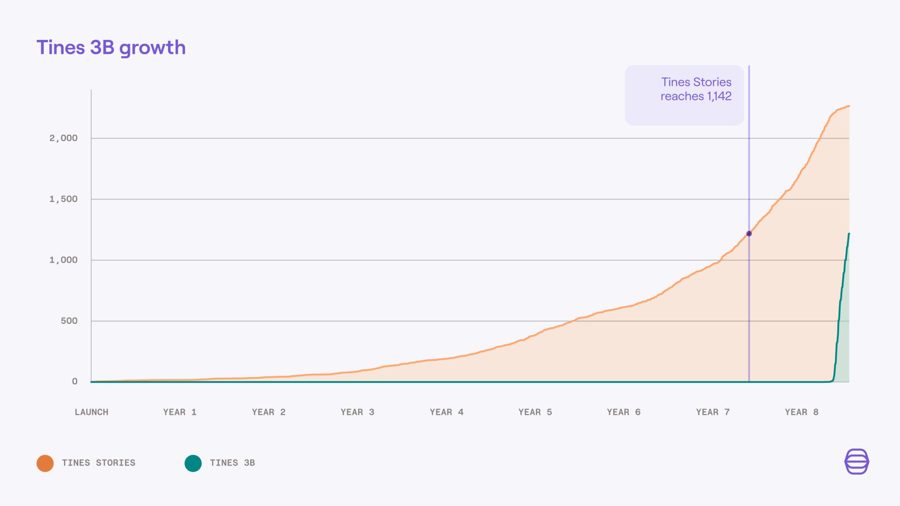
90 days later, we had over 1,000 employee-built workflows in production. 67% of people had built something. 100% had used something that someone else built.
For context, it took us 7 years to hit 1,000 workflows with Tines Stories. We hit that same number in 90 days with Tines 3B.
We're incredibly proud of how fast Tines Stories is, and how much value it brings our customers. But Tines 3B has accelerated that speed in a way we weren't expecting.
On paper, this is the kind of company-wide initiative that can create "wild code" - ungoverned AI building that threatens to blow through budgets and overwhelm the IT and security teams.
But Tines 3B gave everyone a safe, governed environment to build in from day one. Our IT and security teams approved the connectors, data, and systems people could touch, and continuous monitoring meant they never lost visibility or control over what was being built.
That's the trade-off most companies are still trying to figure out: how do you enable speed without losing control? We got a real answer from this experiment, and I think it's a really exciting first step in the journey.
Martin Moroney, our Director of Internal Automation, led this rollout and wrote about it on our blog - the wins, the challenges, and what's next. Read all about it: https://lnkd.in/dtMKiCDq
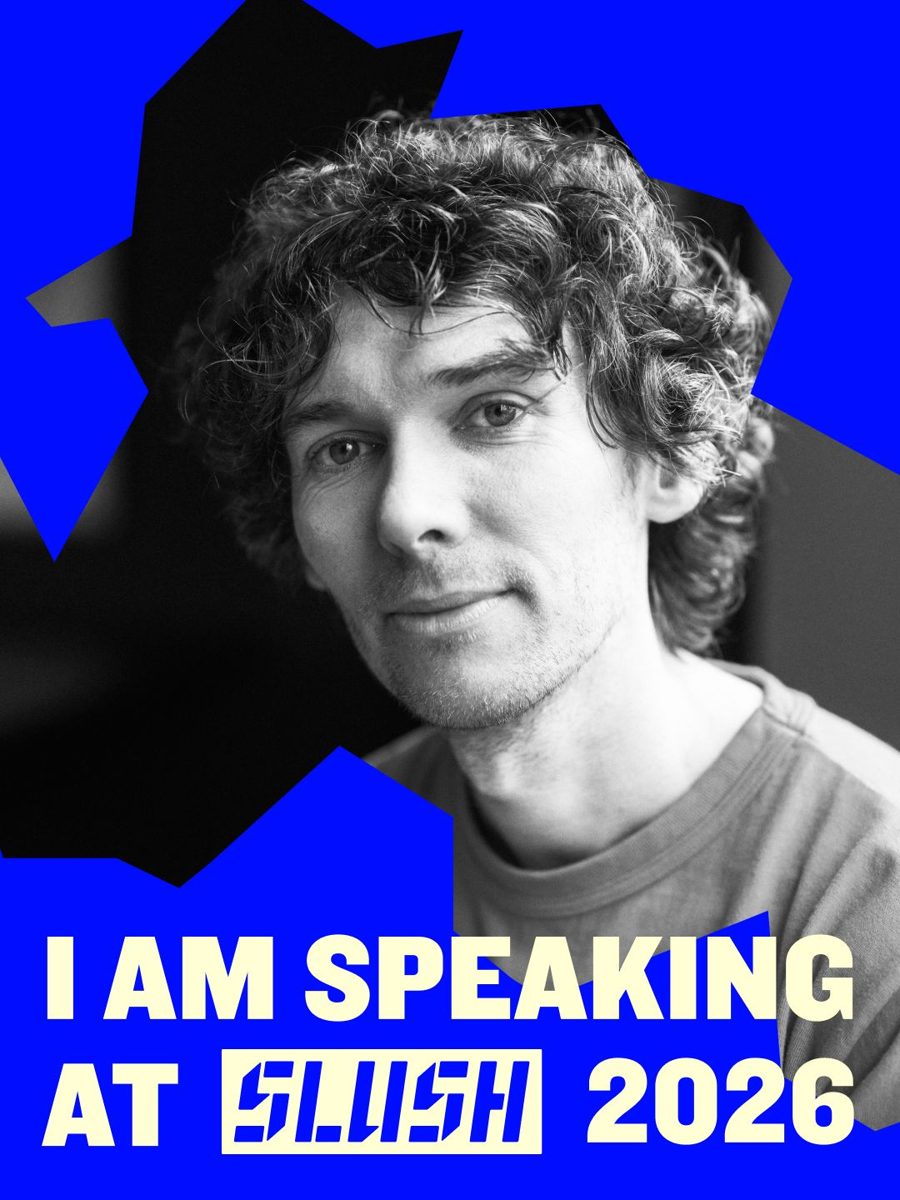
This is who I am now! That's right, I’m heading to Helsinki in November to speak on stage at Slush. Excited to be joining such a great line-up of folks I’ve admired for a long time.
I’ll be speaking on the Builder stage and sharing some reflections on the past few months at Tines and our self-disruption story.
For decades, only a small percentage of people could build software. Most people needed vendor-supplied tools or engineering resources to fix their problems.
That's now changing. 90% of Tines employees are using AI to build software that solves their problems. In the past few months, around 500 employees have built thousands of apps, agents and automations — 400 of which we rely on for day-to-day operations.
This feels different from the impact most companies are reporting. Outside engineering teams, AI is mostly speeding up individual tasks. A few months ago, that was us too.
Now we're seeing a real shift in operational productivity. We've reached the point of no return, where going back feels unfathomable.
I wrote about what this means:
https://lnkd.in/dRhK8CyX
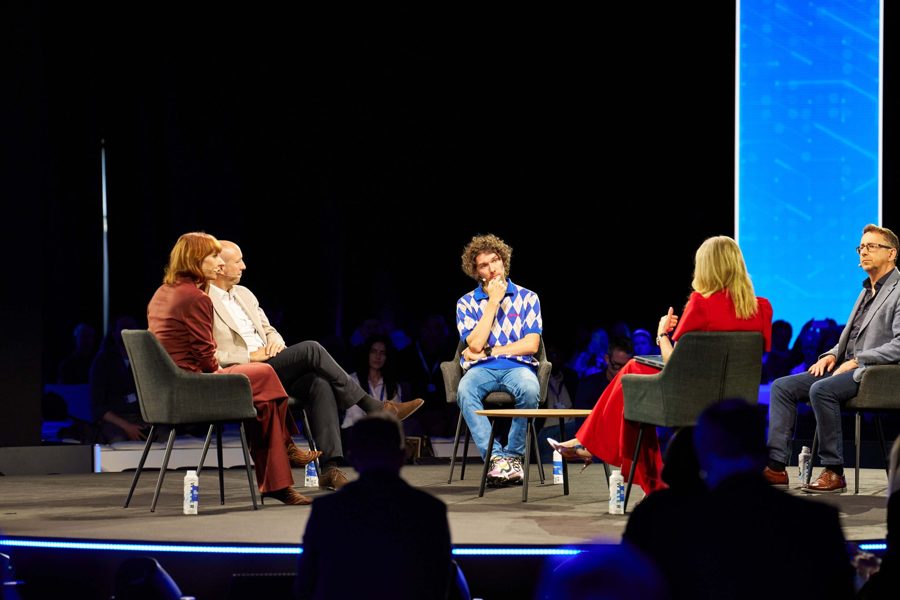
It was great to join my new buds Guillaume Princen, Dorothy Creaven, Donal O'Shea, and Áine Kerr on stage for the International AI Summit to speak about scaling global AI companies from Europe.
The week sparked some important conversations about the major opportunity ahead for Europe, but also the challenges and blockers we’re facing. Make no mistake about it, Europe is behind on AI, and we need to be more honest when talking about what needs to happen for us to accelerate, including the responsibilities of safeguarding and regulating AI.
We’re really proud to be building our company from Europe, and we’re doubling down on our presence in Ireland. Earlier this week we announced 100 new Irish jobs at Tines, with a commitment of 50% of those jobs at entry-level.
At Tines, we’re optimistic about the future. AI will transform how we work and create new and exciting career paths for young people - including in companies like ours.
📸 by Marcus Cassidy
Within a month of giving all of our employees access to build with AI, our non-engineering teams wrote 3.5 million lines of code.
That's the kind of sentence that would have kept me up at night a year ago. But today, I genuinely can't imagine going back to the way we worked before.
For a while, our engineers were the only team at Tines truly transforming how they worked with AI, because they had the infrastructure to back it up: version control, CI/CD, observability. Every other team was missing that.
So we gave it to them. When we rolled out Tines 3B, every team got access to a complete environment for AI building. Four months in, 90% of Tines employees are building software with 3B, and over 400 of those builds are now relied on for daily operations.
There's so much innovation happening inside Tines, one film isn't enough to tell the whole story. So we've made an entire series. In the first episode, you'll hear from just a few of the people who made our Tines 3B rollout possible — Martin Moroney and Christina Troy — along with one of our most enthusiastic builders, Peter Coleman.
We've been reviewing the data from our team's internal Tines 3B rollout, and honestly, the numbers have been pretty staggering.
But something that's harder to quantify is the magic that happens when people are empowered to experiment within their roles.
Case in point: to tell the story of "wild code" - the problems that arise when employees build apps, agents, and automations without IT oversight - our marketing and brand teams put together a guide for IT leaders, and built a video game with Tines 3B to bring it to life.
Three months ago, this idea wouldn't have made it past the first brainstorm - too many resources required, let’s just ship a PDF instead. But because they had access to Tines 3B, they just… built the thing.
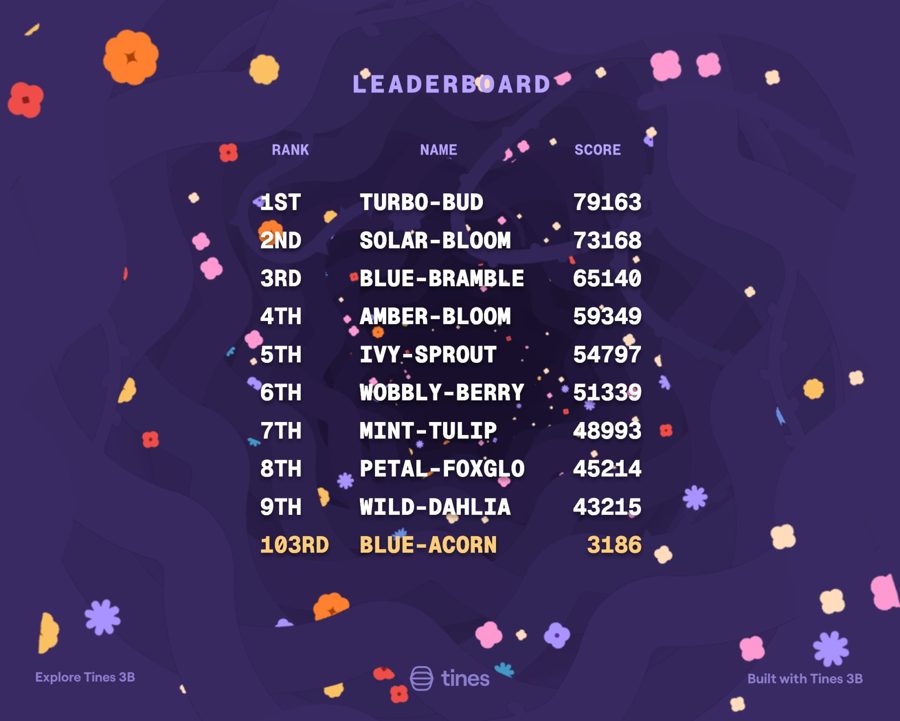
One unfortunate aside: I'm terrible at the game (I'll always be more of a Fifa 14 man). Here's my place on the leaderboard for evidence. But don't let that put you off - our team’s take on wild code is genuinely worth a look:
https://lnkd.in/dyAREWRz