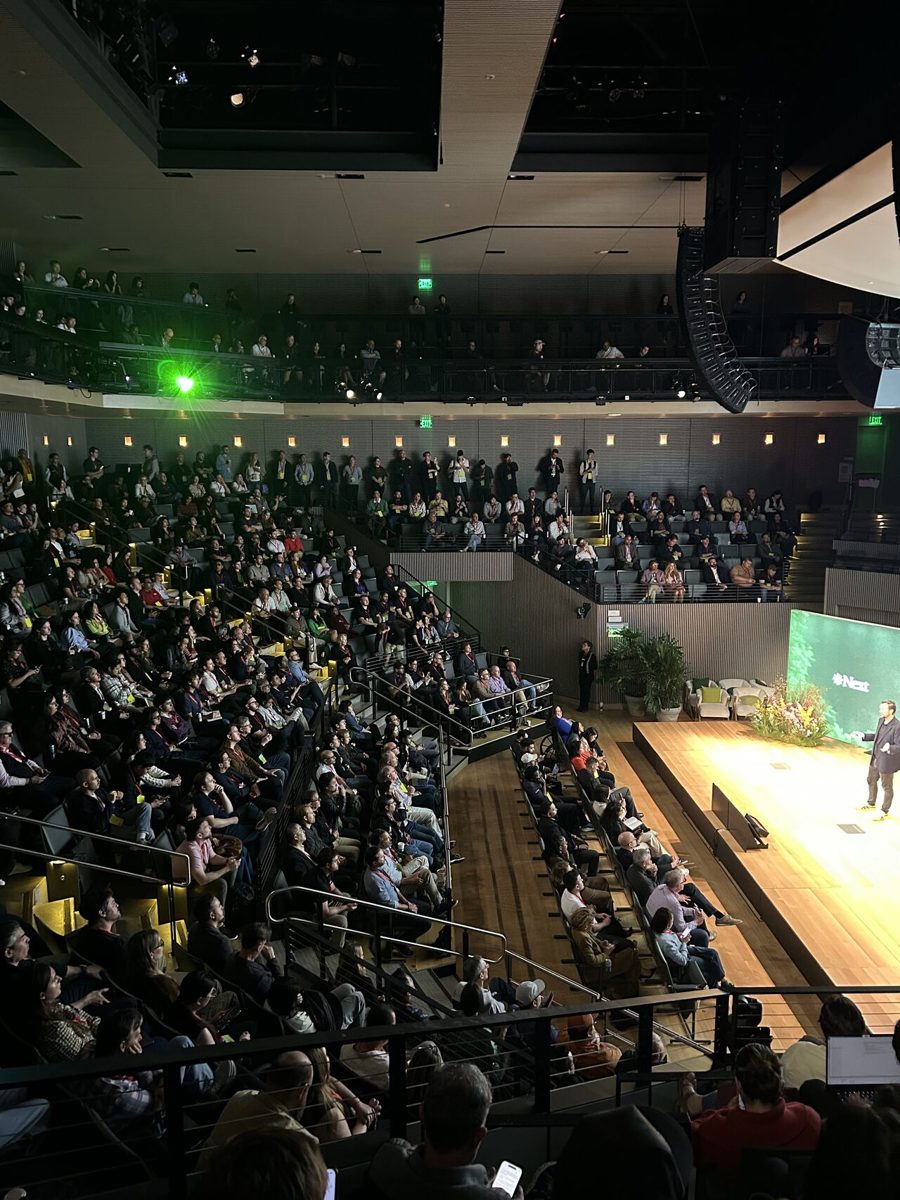
Yesterday at ApolloNext we showed what we've been building for the last year: a complete AI GTM System. We had a packed house and I'm so thankful for our customers that traveled from across the globe to join us in person.
I've spent my entire career on the one problem every business has to solve: how do you find, sell, and retain customers. That's what go-to-market actually is, whether people call it that or not. The last 15 years of GTM has been marked by point solutions and disjointed data.
Marketing has a tool. Sales has a tool. Add a dialer, a data vendor, find an email deliverability layer, and none of it talks to each other. This meant only the lucky few companies that could afford to hire brilliant minds and pay hefty software opex could use the power of these tools.
Most companies would up trying to hold the joints together with duct tape, and most of the time the joints still didn't hold. Now its a real problem, because AI without full context isn't effective, its a guess. Guessing is expensive.
Here's what we built. Three layers that have to move together: data, intelligence, execution. Today we launched real products against all three.
- Apollo Intelligence Layer, live yesterday, which is Apollo Profile plus the GTM Harness. Its always on, it remembers your context instead of forgetting it the second you close the tab, and it already ships with four agents that go find better leads, build sequences, optimize the ones you've deployed, and make it very simple to prioritize your teams day.
- Builder Studio, in closed beta, where you describe what you want in plain English and it writes the code and deploys it. No engineering backlog required. We're spinning up and hosting tenant based infra because our customers already have a fully production GTM environment (that's Apollo).
- Messaging OS, also in closed beta, bringing marketing email campaigns and ad audiences into Apollo alongside sales outreach, so its finally one system instead of two teams guessing at the outcome.
We power GTM for over 600,000 companies today, from first-time founders to more than 100 Fortune 500 teams, and we doubled our user base this past year to over 5 million. That range is the whole point. This isn't built for only the top 1%. World-class GTM shouldn't be a privilege. That's Apollo.io's whole mission. Were just getting started, and I couldn't be prouder of the team that built all of this.
They say that what's old becomes new again... I guess technically we're back to CLI, except instead of the most valuable commands like 'cd\doom | doom.exe' we're just typing claude instead.
It's been a remarkable AI journey for our cutomers with Apollo.io and nearly 75% of our users have adopted our AI products; proving that a complete AI GTM System is the real future.
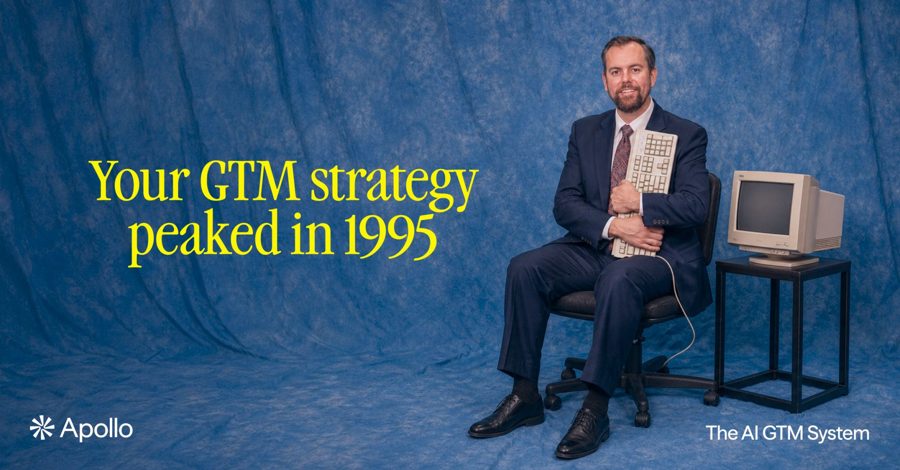
If a GTM Harness, full access to Apollo via MCP or CLI, Powerups, Automated Research, and Clippy's spiritual successor all sound like foreign concepts to you, we're happy to help bring you into the modern era of GTM.
Six weeks ago I built a company-wide reporting dashboard in 30 minutes for $30 in tokens.
The old way to do that: hire a RevOps analyst, hire a data engineer, pipe to data warehouse, set up reporting ETL, bolt on a viz tool. Months and a real budget.
That's the actual story of AI in GTM. Not "it makes things faster." It changes where intelligence enters your stack entirely.
I wrote about why this happened, what Apollo's new developer surface (API, CLI, MCP) has to do with it, and why I think context, not credentials, is what separates the builders who pull ahead from everyone else.
More of my thoughts on this here: https://lnkd.in/dxttYmiY.
Would love to hear what you build.
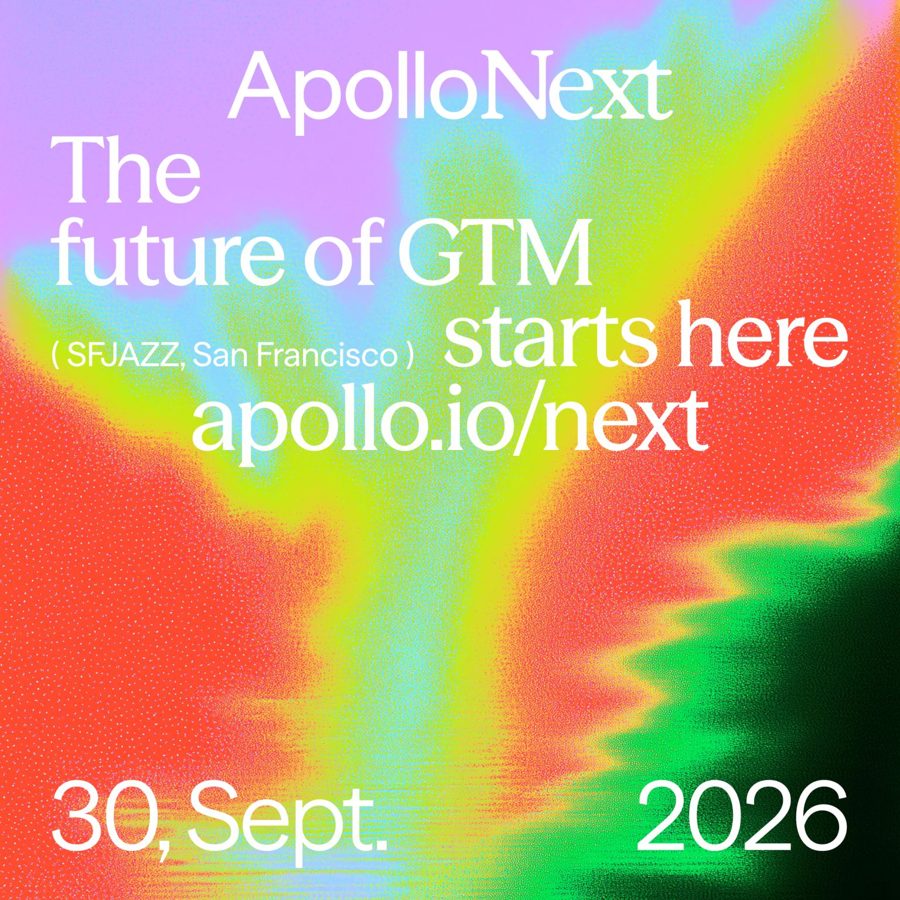
ApolloNext is where we're going to be officially unveiling some really incredible products we've been building; you don't want to miss it!
Also will be speaking extensively about the future of AI GTM and how it's reshaping industries. One of the most incredible things about my position at Apollo.io is the opportunity to speak with dozens of customers each week and see first hand what's really happening instead of theorycrafting.
Some of the fiercest competitors I've ever come across have been in the sales and marketing tech space. For every idea, you're likely to be surrounded with dozens of teams with technical chops and funding behind them. Whether they're building a tech company, an agency, a consultancy, or anything in the middle, it's never the idea or the funding that actually generates the winners.
You have to stand out from the rest, be differentiated on principles, and more creative than any others in your field of competition. A good idea and a team with a pedigreed background just isn't enough.
With that in mind, you have to find humility and respect in the way others choose to compete. If the way your competitors are crafting their niche gets under your skin, evaluate the creativity and understand why their message is resonant.
Only deep respect for the competitors who found ways to win in crowded fields.