Recent posts that drew 100 reactions or more, most reactions first, with no more than two on any one theme. Each links to the original.
My first sales job came with 2 weeks of training, a 12-page laminated binder, and a territory in D.C. so rough the company wouldn't send women into it.
Every morning you'd put on a suit, drive 30 miles, and knock on doors. You had no idea who was behind any of them. Owner ? IT guy ? Branch office of a Fortune 100 ? You found out when the door opened.
The training for getting past the gatekeeper was one line: "Hi - I'm here to speak with whoever handles your IT. Tell him James is here."
Some days you found a buyer. Some days you got physically thrown out of the building.
They'd hire 80 reps a month and maybe 5-10 stuck around because D2D was so tough.
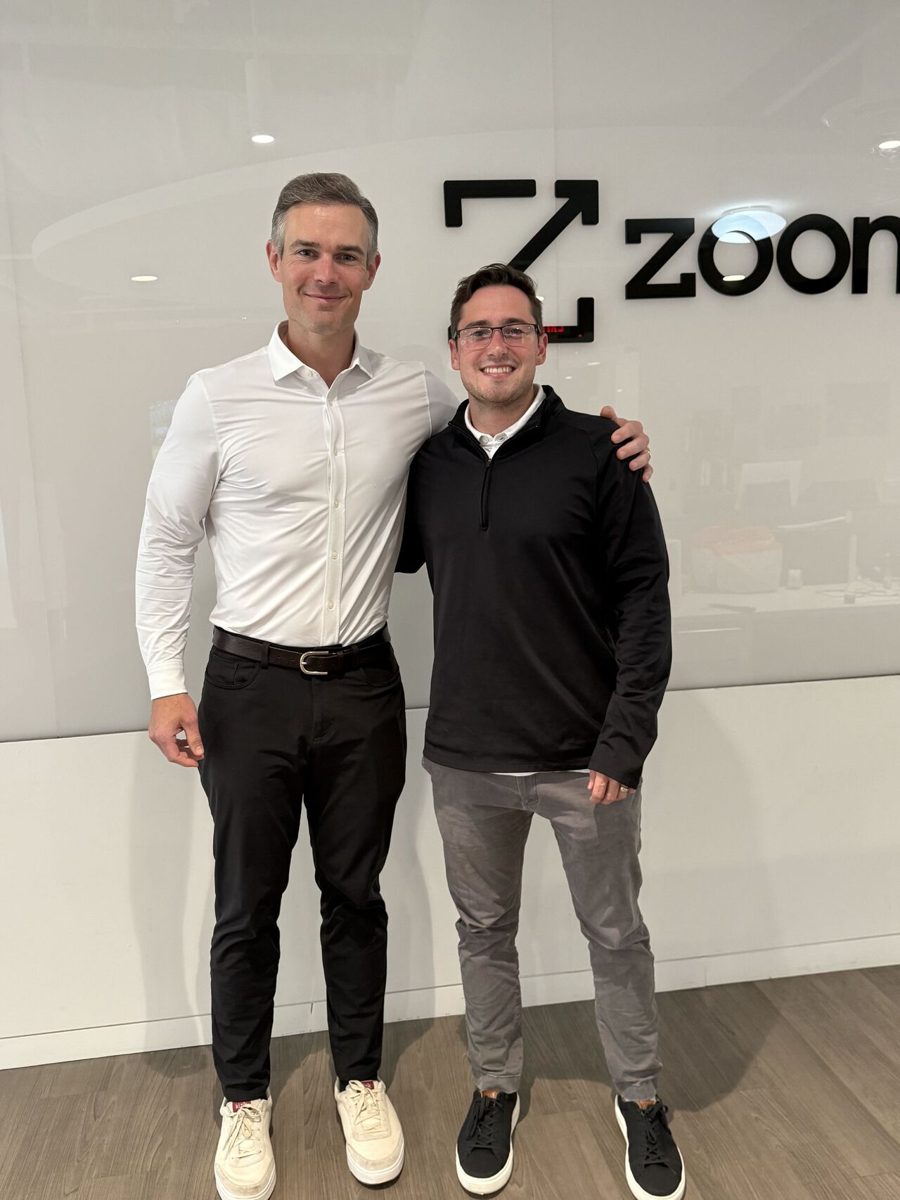
Now I look out of my office at ZoomInfo and see an army of SDRs in a Class A space - snacks, Bevi machines, and a full picture of exactly who they're calling before they dial.
I still have this cringe pic of me back in the day - the most we got then was burnt coffee and a binder. So when young people ask me about sales, I tell them there's never been a better time.
If you're talented and outwork the people around you, it's still the most linear path to success there is. And the doors open a lot easier now…
If that sounds like you, we’re hiring. At ZoomInfo, we’ve built the best SDR development program out there:
- We help reps specialize in 1 of 4 in-demand pathways to build skills they’ll use for the rest of their careers.
- Hitting targets can unlock a raise every 6 months instead of waiting for annual review cycles.
Learn more here: https://lnkd.in/eQiB49W2

Zach Stoia is the Vince Lombardi of sales.
Our 5x back-to-back Presidents Club winner just closed a $500k deal with a publicly traded company using 3 winning plays.
Zach’s prospect was a workforce solutions company - a hard close on paper. Staffing firms are under brutal margin pressure right now. Clients scrutinize every expense, competitors underbid, and reps are asked to do more with less while still hitting growth targets.
But Zach made the close look simple, taking it from security review to signature in under 60 days with 3 plays:
1. He knew the customer's world before he walked in
Zach understood where their sales reps were getting burned: contact data that bounces (or goes to the completely wrong person), no signals for when to reach out, and tools that don’t live inside the CRM.
2. He ran a head-to-head comparison on benchmarks they’d been burned on
That was data accuracy, signal precision, multi-threading. ZoomInfo was the clear winner.
3. He proactively cleared the path to signature
After winning the head-to-head, the objection was reps won't touch a tool outside their CRM. Zach showed them ZoomInfo plugs natively into their CRM, and armed his internal champions with everything they needed to get the deal across the line.
Nothing Zach did here is rocket science. Know your customer. Make the product prove itself. Build and enable champions who'll fight from the inside.
Zach's edge is being painfully consistent, deal after deal for half a decade.
Keep it up Zach.
Over the last 2 years at ZoomInfo, we rebuilt outbound around AI agents. We call it GTMO, and it 7x’d our outbound pipeline. Here’s how we did it, and what didn’t work along the way:
Before that, SEO had been our main source of inbound. A buyer Googled tools like ours, landed on our pricing page, and a rep called them the same day knowing which company they were from and what they’d looked at.
Now buyers ask ChatGPT or Claude, which rewrites them a comparison of 5 vendors. There’s no click, no form fill, and no clear path to ranking at the top.
So we stopped trying to patch inbound and rebuilt outbound.
Our first attempt didn’t work. AI SDRs prospected on thin data and went after the wrong accounts.
The agents didn't have the right context to make good decisions. It was clear we couldn’t go fully agent-led.
Once we realized that, the fix was to put the agents behind our sellers rather than in front of our customers.
GTMO has 3 parts:
1. Agents score every account before a rep sees it.
Our old lists were full of “warm” leads that weren’t warm. Now an account has to pass a series of checks. Is it in an industry and size range we sell to? Does it have the roles that usually buy from us? Is it actively researching tools like ours? Have we worked with them before? Only the accounts that pass reach a rep.
2. Agents do the account research before the call.
Our outbound reps used to spend 7 minutes between calls pulling names, checking LinkedIn and looking people up in ZoomInfo. Now a rep opens an account and the right contacts, our history with them, and the reason to call today are already there.
3. Every rep gets a talk track for the industry they’re calling.
We pulled the best openers and discovery questions from 1,000 hours of our own calls and built a talk track for each sub-vertical. A rep calling a logistics company opens differently from one calling a software company.
The results so far are pretty good:
- Leads per week in our GTM-O campaigns went from 150 to 1,100.
- Average opportunity size went up 12.5%.
Still lots to do here, will keep sharing as we learn.
Anyone else rebuilding outbound around agents? Would love to compare notes on what’s worked and what hasn’t.
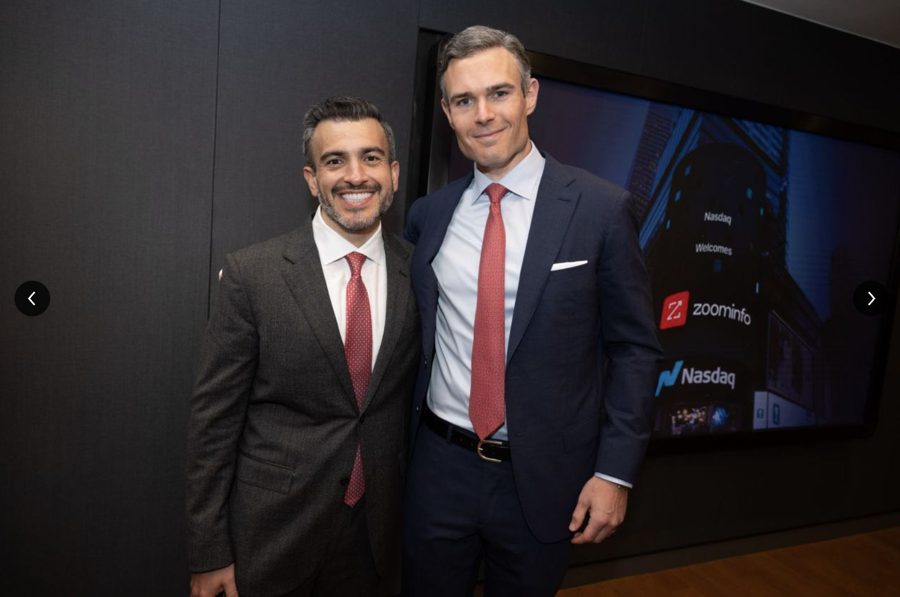
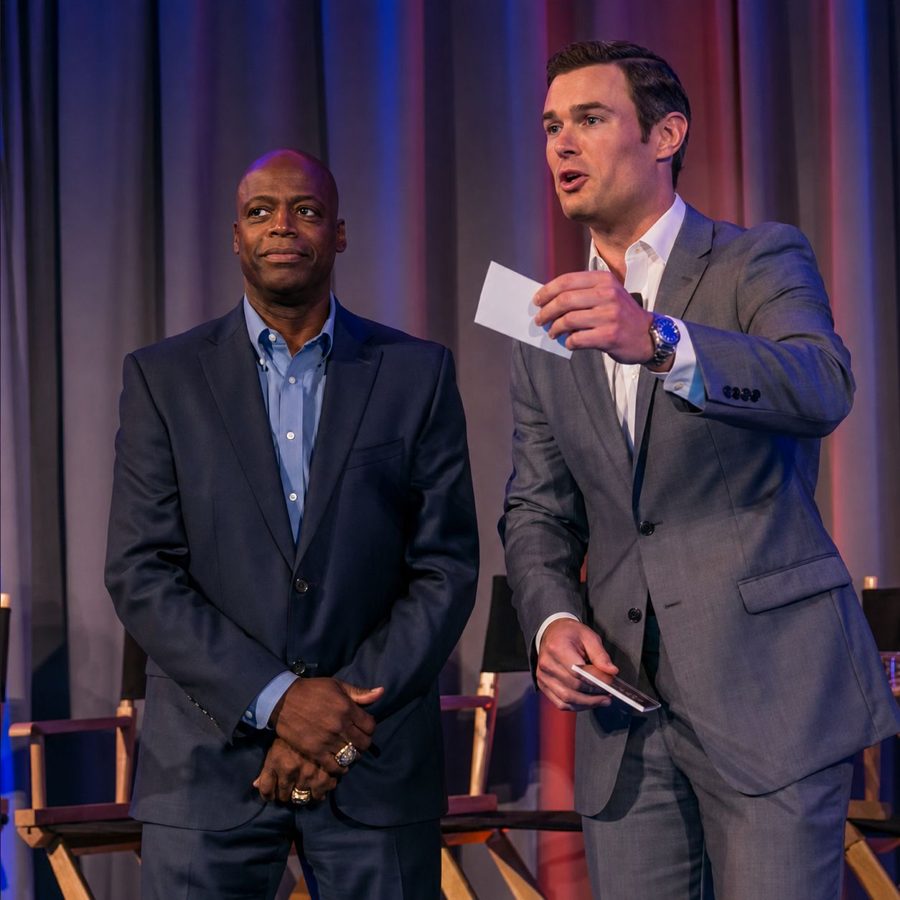
Earlier this month, we took 20 ZoomInfo enterprise customers to the US Open and talked about what's changing in GTM this year.
We watched from front row seats as Carlos Alcaraz and Aryna Sabalenka battled it out on the court. And off the court, we heard from former world No. 1 Garbiñe Muguruza, who shared some gems on performing under pressure at our executive welcome reception.
The thing I love most about tennis is that every set starts from scratch. It doesn't matter if you got battered or crushed through the last one. You're back at 0-0.
Sales works the same way. Motions that won last year don’t necessarily carry over. You have to keep reinventing yourself.
Nobody knows this better than our customers. It was great to hear from them directly on what’s working, what’s not, and how sales leaders are using AI in GTM.
A huge thank you to the customers who made the day so valuable, and a special shoutout to 🐰 Jen Igartua from Go Nimbly, and to Stephen Antuna, Alex Lazerowich, Sneh Kakileti, and Rob Lotterman from ZoomInfo.
California Executive Club is up next. Date and location coming soon.

At Vonage we built a billion-dollar enterprise sales motion in 6 years on the back of ZoomInfo. It transformed our GTM in a way we didn’t expect…
It allowed us to stop going door to door.
Back then, reps drove out to a territory, walked into buildings, and asked the receptionist for whoever handled IT. You didn't know if the CIO was in that building or even if there was a CIO.
The model itself worked but it was very inefficient. We’d hire 50 people each month and only 8 of them would last 90 days. People didn’t want to do the job for more than a couple years.
When we started using ZoomInfo, that all changed.
1. We could finally pull our salespeople out of the field.
No more unpleasant surprises or being thrown out of buildings. Our sales guys were now indoors, and before every call they had the name, the title, the tech stack. We didn't have to go searching for the CIO - it was all on a plate.
2. We moved to the modern GTM model of SDR/BDR.
ZoomInfo modernized how everyone did GTM in the 2010s. A field rep could hit maybe 40–50 doors in a day. An SDR could make 200 calls, and to people we knew were the potential buyers.
A decade later and ZoomInfo is modernizing GTM again. The grunt work that filled an SDR's day - monitoring signals, building lists, chasing follow-ups - is moving to agents that don't sleep. Sellers now get to spend more time selling.
3. The talent pool exploded
Tell someone their job is knocking on 50 doors in a business park and you're not getting the cream of the crop. Once it was a desk, a phone, we were able to attract a different caliber of talent - and attrition in the sales team fell from over 60% to the low teens.
I saw what better data did to a GTM org from the customer side. It's a big part of why I joined ZoomInfo and I see a similar transformation beginning now with AI.
ZoomInfo has acquired Workbounce (acquired by ZoomInfo)!
Before they built Workbounce, Rowan Bailey and Adam Smith used ZoomInfo like everyone else: external signals that told them who to sell to, and when. Who works at an account, who’s buying, who’s hiring, who’s raised.
They realized some of the best intel on an account was hidden in first party data - call recordings where the champion went off script, an email thread where the pricing was agreed on, a Slack message about next quarter’s budget.
All of it was already inside the company, but none of it was easily available for reps.
That’s the problem they built Workbounce (acquired by ZoomInfo) to fix.
It takes your team’s unstructured data (calls, emails, Slack, decks, account notes) and connects it to the right account in the GTM Context Graph, alongside ZoomInfo’s market data, so an AI agent can pull from both.
Today, it’s live in ZoomInfo’s GTM.AI.
For a rep, that means 3 things:
1. Account handoffs without starting over.
2. Entering every meeting with full context.
3. Buyer questions answered in minutes (without the wild goose chase).
Learn more here: https://lnkd.in/eKs5JrwD